
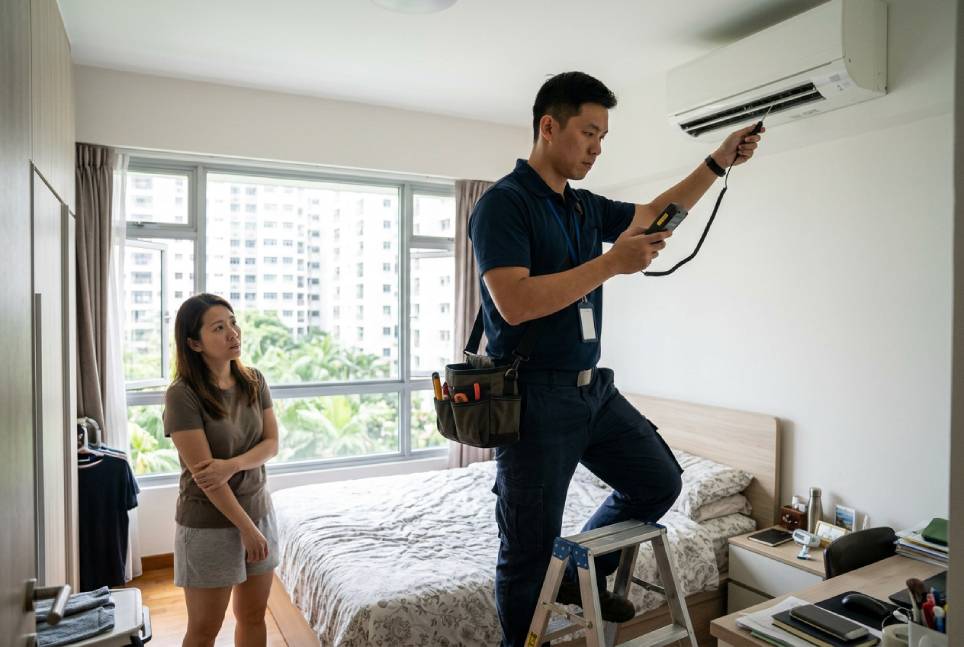
You switch on your air conditioner, lower the temperature and wait, but the room still feels warm. The indoor unit appears to be running normally, yet the cooling performance is nowhere near what you expect.
An aircon that is not cold is one of the most common problems homeowners can experience. Sometimes, the cause is relatively simple. In other situations, poor cooling can indicate a component fault that requires professional aircon repair Singapore services.
Understanding the possible causes can help you determine what you can check yourself and when it is better to have the system professionally inspected.
Start With a Few Simple Checks
Before assuming that something inside the air conditioner has failed, check the basic settings first.
Make sure the unit is set to cooling mode rather than fan or dry mode. Check that the selected temperature is lower than the current room temperature and ensure the fan speed has not accidentally been set too low.
You can also check whether doors and windows are properly closed. If warm outdoor air is continuously entering the room, the air conditioner may struggle to maintain a comfortable temperature.
If the settings appear correct but the room remains warm, the problem may be elsewhere in the system.
Dirty Air Filters May Be Restricting Airflow
Air filters collect dust and airborne particles as air passes through the indoor unit. Over time, these filters can become clogged.
When airflow is restricted, less cooled air can circulate throughout the room. You may notice that the air coming from the unit feels cool but the airflow itself is noticeably weaker than before.
Cleaning the filters may improve the situation if the buildup is minor.
However, if airflow remains weak after the filters have been cleaned, dirt may have accumulated deeper inside the air conditioner. Components such as the evaporator coil or blower may require professional cleaning.
A Dirty Evaporator Coil Can Reduce Cooling
The evaporator coil is an important part of the cooling process. As air passes across the cold coil, heat is absorbed before cooled air is circulated back into the room.
Over time, dust and grime can accumulate on the coil. A heavily contaminated coil may reduce heat transfer and make the air conditioner less effective.
This problem is not always solved by simply washing the filters.
If significant buildup has developed inside the unit, a technician may recommend deeper cleaning depending on its condition. In some cases, an aircon chemical overhaul may be considered when normal servicing is no longer enough to remove stubborn internal buildup.
Refrigerant Problems Can Affect Cooling Performance
Refrigerant plays a key role in transferring heat through an air conditioning system. If the refrigerant level is insufficient, the aircon may run for a long time without cooling the room effectively.
Possible signs can include:
- Air that does not feel sufficiently cold
- Cooling performance becoming progressively weaker
- The aircon taking much longer to cool the room
- Ice forming around certain parts of the system
Low refrigerant should not simply be treated as something that needs regular topping up. If refrigerant has escaped from the system, the underlying cause should be identified.
A qualified technician can inspect the system for possible leakage or other refrigerant-related issues before recommending the appropriate repair.
The Indoor Fan May Not Be Working Properly
The indoor fan helps distribute cooled air into the room. If the fan motor is weak, damaged or unable to operate at the correct speed, cooling may feel inadequate even when other parts of the system are functioning.
You may notice weak or inconsistent airflow, unusual noises from the indoor unit or a fan that does not appear to respond correctly when you change the speed setting.
Because the fan assembly is located inside the unit, diagnosing a motor or electrical problem is generally better left to an aircon technician.
The Outdoor Condenser Could Be the Problem
Not every cooling problem comes from the indoor aircon unit.
The outdoor condenser releases heat that has been removed from your room. If it cannot operate properly, the entire cooling process may be affected.
Problems can arise from excessive dirt, restricted airflow, a malfunctioning fan or faulty internal components.
If your indoor unit is running but the room remains warm, checking the outdoor system may therefore form part of a professional diagnosis.
Avoid attempting to open or repair condenser electrical components yourself. These parts should be inspected safely by a trained technician.
A Faulty Sensor May Affect Temperature Control
Air conditioners rely on temperature sensors to determine when and how the system should cool the room.
If a sensor becomes faulty or is not reading the temperature correctly, the air conditioner may behave unexpectedly. It could stop cooling too early, operate inconsistently or fail to maintain the temperature you selected.
Sensor problems can sometimes appear similar to other cooling issues, which is why accurate diagnosis is important before replacing components.
Is the Aircon Too Small for the Room?
Sometimes, an air conditioner is functioning correctly but simply cannot handle the cooling requirements of the space.
A unit with insufficient cooling capacity may run for long periods while struggling to bring the room to the desired temperature. This can be particularly noticeable in larger rooms or spaces exposed to significant sunlight.
If poor cooling has existed since the air conditioner was installed, rather than appearing suddenly, system capacity may be worth reviewing.
Correct sizing is therefore an important consideration when planning a new aircon installation.
When Does an Aircon That Is Not Cold Need Professional Repair?
If you have checked the settings, cleaned accessible filters and closed the room properly but cooling remains weak, it may be time for a professional inspection.
You should also consider arranging an aircon repair Singapore service when the cooling problem occurs together with symptoms such as unusual noises, repeated shutdowns, ice formation, error codes or inconsistent operation.
Rather than immediately replacing parts, a technician should first determine the actual source of the problem.
Depending on the diagnosis, the solution might involve cleaning, repairing a component, correcting a refrigerant issue or replacing a faulty part.
Don’t Ignore Gradually Declining Cooling Performance
An air conditioner does not always stop cooling suddenly. Performance can decline gradually, making it easy to become accustomed to longer cooling times or increasingly weak airflow.
Ignoring these changes may allow an underlying problem to become more serious.
Regular aircon servicing can help keep accessible components clean and provide opportunities to identify developing problems. However, servicing and repair serve different purposes. If a mechanical or electrical component has already failed, cleaning alone may not resolve the issue.
Pay attention to changes in how your aircon sounds, feels and operates. Early inspection can make it easier to identify the actual cause.
Get the Cause of Poor Cooling Properly Diagnosed
When your aircon is running but not cold, there is no single solution that applies to every system.
The problem could be as simple as dirty filters, or it may involve the evaporator coil, fan, refrigerant system, sensor or outdoor condenser. The right solution depends on identifying the actual cause rather than guessing which part needs attention.
If simple checks do not restore cooling, Non-Stop Cooling can inspect the system and determine whether aircon repair Singapore, professional cleaning or another solution is appropriate for your air conditioner.
Getting the problem diagnosed correctly can help you restore comfortable cooling without carrying out unnecessary work.


